
Z. Luo, Z. Mai, J. Cheng, Y. Zhou, Y. Zhao, M. K. Chen, "Systematic Performance Analysis of a Propagation‐Type Metalens Under Practical Fabrication Imperfections," Advanced Photonics Research 7 (4), e202500305 (2026). (Front cover) (Corresponding author)

Metalenses based on dielectric metasurfaces have emerged as a powerful platform for realizing compact and multifunctional optical systems. However, the optical performance of practical devices is influenced by fabrication imperfections inherent to nanomanufacturing processes, which cause deviations from ideal design parameters. In this work, we establish a quantitative framework that connects fabrication-induced geometric errors to system-level focusing performance through a statistical phase-error model. Using TiO2 nanopillars on an indium tin oxide substrate as a representative unit cell, three dominant fabrication imperfections—uniform size deviation, sidewall inclination, and corner rounding—are analyzed via full-wave simulations at 532 nm. Phase deviations were modeled by Gaussian functions to describe their statistical behavior. Random phase disturbances generated from the combined distribution were applied to the metalens. Simulations indicate that typical fabrication errors cause only minor efficiency loss, while the focal position and spot shape remain almost unchanged. Furthermore, this study provides a generalizable statistical approach for predicting and optimizing metasurface performance under realistic manufacturing conditions.
J. Cheng, X. Li, W. Zhu, M. Zhou, Z. Geng, W. Sun, , M. K. Chen, "Polarization-multiplexed meta-neural networks for simultaneous imaging and all-optical classification," Intelligent Opto-Electronics 2, 1, 250017 (2026). (Corresponding author)

Deep learning has transformed perception and inference but remains constrained by memory–compute bottlenecks, latency, and energy costs. All-optical diffractive deep neural networks (D2NNs) alleviate these limitations by computing with light, yet most implementations trade image formation for direct classification, limiting downstream processing. Here we introduce a polarization-multiplexed meta-neural network (PMNN) that unifies imaging and classification within a single, static optical platform. The PMNN employs cascaded metasurfaces whose meta-atoms jointly harness geometric (Pancharatnam–Berry) and propagation phases to engineer distinct phase profiles for left- and right-circularly polarized (LCP and RCP) channels. This polarization contrast enables dual-channel functionality. Under LCP illumination, the system performs lens-like imaging, whereas under RCP illumination, it executes all-optical classification via diffractive routing to predefined detection regions. Built on a differentiable angular-spectrum forward model and trained end-to-end, the PMNN achieves 96.51% accuracy on handwritten-digit recognition while delivering an imaging mean squared error of 5.38×10⁻³ , a peak signal-to-noise ratio of 22.70 dB, and a structural similarity index measure of 0.90. By coupling perception with inference without mechanical switching or electronic post-processing, the proposed approach enhances utility, reduces computational load, and offers a practical path toward compact, scalable, and energy-efficient optical intelligent systems.
Z. Geng, Z. Li, M. Zhou, Z. Chen, G. Yuan, J. Noh, S. Lee, C. Park, H. Geng, X. Li, K. Jiang, M. K. Chen, J. Rho, "Ultra-efficient physical field computing by complex-valued network quantization," Nature Communications 17, 3762 (2026). (Corresponding author)

Neural network quantization is an established technique for compressing real-valued models, but its application to complex-valued networks—essential in electromagnetics, acoustics, and quantum physics—remains underdeveloped. Conventional quantization methods treat real and imaginary components as independent channels, thereby disrupting the algebraic structure of complex multiplication and distorting essential phase relationships. To address this problem, we propose a real-imaginary joint quantization method that minimizes error propagation in complex multiplication and maintains coherence in phase-sensitive tasks, thereby preserving amplitude-phase fidelity during complex-valued inference. Combined with physics-aware adaptive precision training, this approach demonstrates outstanding performance across hologram generation, audio classification, wireless signal classification, and synthetic aperture radar signal recognition tasks. Compared to the state-of-the-art hologram generation model HoloNet, our approach achieves a 3.9 dB improvement in peak signal-to-noise ratio while reducing computational load and memory consumption by 99.1% and 99.8%, respectively. This research establishes a pathway toward lightweight, high-fidelity complex-valued neural networks for scientific computing and coherent signal processing.
W. Zhang, G. Yuan, J. Sun, C. Yao, M. K. Chen, Z. Geng, L. Xu, F. Qi, S. Shi “LFMP: physics embedded neural network for light-field multispectral thermography,” Photonics Research, 13, 12, 3399-3409 (2025). (Corresponding author)

Light-field multispectral radiation thermometry has emerged as a promising non-contact technique for two-dimensional surface temperature measurement. However, its performance is still limited by temperature inversion algorithms. In this work, we propose LFMP (light-field multispectral physics-embedded network), a physics-informed neural network framework designed for temperature inversion in light-field multispectral thermography. The framework explicitly incorporates Planck’s law and a reference temperature model into its architecture, thereby enforcing physical consistency and enhancing interpretability. The framework enables high-accuracy, spatially resolved reconstruction of two-dimensional temperature fields without requiring explicit emissivity modeling. Blackbody calibration experiments conducted over the temperature range of 573 K to 823 K demonstrate high accuracy, with absolute errors below 5 K and relative errors of less than 1%. In blade film cooling experiments, LFMP maintained robust performance, yielding absolute errors generally below 10 K and relative errors of less than 2% compared to thermocouple measurements. Notably, under reduced coolant flow rates (≤11 g/s ), the relative error further decreased to below 1%, with absolute errors remaining under 8 K. Compared with conventional optimization-based methods, LFMP demonstrates improved temperature accuracy and smoother spatial distributions in the tested cases, highlighting its potential for thermal diagnostics in engineering applications.
J. Gu, Y. Huang, Z. Chen, M. K. Chen, Z. Geng “Implicit neural representation based on optoelectronic periodic nonlinear activation,” Advanced Photonics Nexus 4 (6), 066014-066014 (2025).

Implicit neural representation (INR) networks break through the accuracy and resolution limitations of traditional discrete representations by modeling high-dimensional data as continuously differentiable implicit neural networks, enabling lossless compression and efficient reconstruction of details in a compact form. However, an optical-assisted INR network has yet to be demonstrated. INR networks require high nonlinearity, whereas implementing analog nonlinear activation in photonic neural networks is a challenge. Inspired by the inherent physical properties of modulators, we propose an optoelectronic nonlinear activation and implement it on the image reconstruction task. Simulations and experiments demonstrate that the proposed optoelectronic periodic neural network can represent images and perform image reconstruction with excellent results. This approach empowers complex image reconstruction with high-frequency details and reduces the amount of required hardware. Our method enables the development of compact, efficient optoelectronic neural networks, utilizing repeatable modular units for scalable and practical high-performance computing. It can enable scene generation and compression in biomedicine, autonomous driving, and augmented reality/virtual reality.
Y. He, M. K. Chen, M. Huang, Y. Zhang, X. Liu, Z. Luo, C. Yao, H. Li, F. Zeng, Z. Geng, F. Qi, S. Xiao, S. Shi and D. P. Tsai, "Dispersive Meta-lens Thermometry for High-temperature Measurements," Nature Communications 16, 10090 (2025). (Co-First author)

Temperature is a fundamental parameter that governs the rate and extent of thermal energy transfer. Accurate measurement is crucial for safe and efficient energy exchange. Radiation thermometry, favoured for high-temperature measurement due to its non-invasive nature, often requires bulky optics like interference filters. Meta-lenses, which separates incoming thermal radiation across a wide spectrum, offers a promising path toward integrated and miniaturized solutions. This work proposes a Dispersive Meta-lens Thermometry (DMT) for high-temperature measurements, employing a dispersive meta-lens with controllable dispersion to encode hyperspectral information into a compressed image. This is deciphered using convex spectral compress sensing and a deep reverse dispersive network. Experimental results show DMT achieved a 6-fold reduction in measurement error ( < 0.32%) over recent multi-spectral light-field thermometry approaches, and measurement errors for flame impingements maintained below 1.5%. No doubt further integration is required, this work demonstrates the potential for miniaturized hyperspectral high-temperature thermometry.
Z. Zhao, X. Liu, Y. Ji, Y. Zhang, Y. Chen, Z. Luo, Y. Song, Z. Geng, T. Tanaka, F. Qi, S. Shi, and M. K. Chen, " Meta-Lens Digital Image Correlation," Opto-Electronic Advances 8, 9, 250014 (2025). (Corresponding author)

With the same level of measurement accuracy, more portable and miniaturized measurement systems will have greater advantages, providing users with more flexible and convenient measurement solutions. Here, we introduce a new type of digital image correlation (DIC) system that incorporates a binocular meta-lens, featuring a simple and compact configuration. Meta-lens is one of the promising flat optical imaging devices that are ultra-thin, customizable, and well-suited for use in confined spaces. We evaluated this binocular meta-lens based DIC(BM-DIC) system through classic in-plane and out-of-plane translation tests, followed by a bending test on a helicopter wing model to capture 3D displacement and deformation fields. For in-plane translations, the system achieved high precision with a standard deviation (σ) below 2 µm. Despite a small baseline of 4 mm, the system maintained a σ of approximately 32 µm for out-of-plane translations. Comparative analysis with conventional dual-camera stereo DIC systems showed that the BM-DIC system maintains an acceptable relative error margin of about 1% in measured strain fields despite a 75-fold reduction in baseline length. This research demonstrates the integration of DIC techniques with advanced meta-lens technology, indicating substantial potential to enhance the capabilities of DIC technology in experimental solid mechanics.
Y. Zhou, Z. Chen, J. Cheng, Q. Zhang, Z. Geng, Z. Wu, M. K. Chen, " High‐Resolution 3D Imaging with Tunable Point Cloud Projection Based on Meta‐Device," Laser & Photonics Reviews 20 (2), e01327 (2025). (Corresponding author)

3D imaging is a crucial way to record stereoscopic information of real-world objects in machine vision, medical plastic surgery, heritage conservation, and other applications for creating comprehensive topography information databases. The point cloud projection based on the metasurface has the characteristics of a large field of view and depth of field. However, once the metasurface is completed, the spatial sampling rate is fixed and challenging to improve, resulting in a low-resolution reconstruction. In this study, a meta-based tunable point cloud device composed of a meta-lens array and a tunable objective collaborative optimization is proposed. The meta-device can project tunable point clouds to change the sampling rate of objects' spatial information. The proposed meta-device has experimentally demonstrated the features of high spatial resolution (17 times better than the original) with an accuracy of 0.035 mm. Such a design can achieve high spatial and depth resolution while keeping the system size small. This concept opens new possibilities for applications such as facial recognition, wearable devices, and human-computer interactions. It opens up new progress in industrial and consumer 3D reconstruction.
Y. Song, Y. Zhang, X. Liu, T. Tanaka, M. K. Chen and Z. Geng, "High-precision three-dimensional imaging based on binocular meta-lens and optical clue fusion. npj Nanophotonics, " 2(1), 28 (2025). (Corresponding author)

Three-dimensional (3D) imaging plays a crucial role in autonomous driving, medical diagnostics, and industrial inspection by providing comprehensive spatial information. Metalens-based 3D imaging is highly valued for imaging applications thanks to its compactness, with enhanced precision remaining a key research pursuit. Here, we present an integrated high-accuracy 3D imaging system combining binocular meta-lens with an optical clue fusion network. Our innovation lies in the synergistic fusion of physics-derived absolute stereo depth measurements and machine learning-estimated relative depth through adaptive confidence mapping - the latter effectively addressing the inherent limitations of absolute depth estimation in scenarios with insufficient matching features. This hybrid approach achieves unprecedented precision of depth estimation (error <1%) while maintaining robust performance across feature-deficient surfaces. The methodology significantly expands viable detection areas and enhances measurement reliability, accelerating practical implementations of metalens-enabled 3D imaging.
Y. Song, J. Yuan, Q. Chen, X. Liu, Y. Zhou, J. Cheng, S. Xiao, M. K. Chen, and Z. Geng, " Three-dimensional Varifocal Meta-device for Augmented Reality Display," PhotoniX, 6 (1), 6 (2025). (Corresponding author) [IF = 15.7, Top 5% in Optics, A+].

Augmented reality (AR) displays have gained significant attention for their ability to blend the real and virtual worlds seamlessly. However, they face challenges like the vergence-accommodation conflict and a limited eyebox. The AR community is actively seeking lightweight, integrative optical elements to overcome these limitations. In this study, we demonstrate a three-dimensional varifocal meta-device for AR display. The meta-device is composed of three cascaded metasurfaces with Moiré and off-center Fresnel lens phase profiles designed to dynamically manipulate the focus point in three-dimensional space. The cascaded metasurfaces are designed and fabricated by the TiO2 nanopillars with varying diameters, which are polarization-insensitive for light field manipulation. The focal point position is precisely controlled by the relative rotation between the metasurfaces. The meta-device achieves an effective focal length ranging from 3.7 mm to 33.2 mm and can adjust the lateral focal point within the same range. The dynamic eyebox size varies from 4.2 mm to 5.8 mm. This lightweight, integrated meta-device is well-suited for various imaging applications, including AR displays, as it simultaneously addresses the vergence-accommodation conflict and expands the eyebox.
J. Cheng, Y. Zhou, Y. Gao, B. Liu, X. Liu, L. Shi, Z. Geng, and M. K. Chen, “Quantitative Phase Imaging for Meta-lenses by Phase Retrieval,” Advanced Optical Materials 2402833 (2025). (Corresponding author) [IF = 8, Top 10% in Optics, A+].
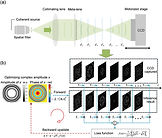
Meta-lenses have advanced focusing and imaging capabilities. Traditional methods for assessing meta-lenses performance, such as focusing light field scanning, are time-consuming and cannot obtain phase information. Meta-lenses require accurate and fast phase information measurements for industrial-level applications. Here, a novel approach is introduced for meta-lenses phase recovery from defocused images. The precise phase can be obtained by optimizing the complex amplitude of the meta-lens from the experimentally collected defocused images through complex gradient descent. This method doesn't need complicated experimental setups like traditional off-axis interferometry. This method is robust and applicable to meta-lenses with diverse phase modulations. The investigation is extended to measure the phase information of the Pancharatnam-Berry phase-based meta-lens and the achromatic meta-lens in different incident wavelengths. These results demonstrate that this technique accurately recovers phase information. The 3D intensity profile can be retrieved at arbitrary distances, which is faster and more accurate, enabling the prediction of optical properties such as focal length. This advancement enhances the understanding of meta-lense behavior in practical scenarios. It provides a foundation for future optimizations in meta-lenses design, potentially leading to more efficient and versatile optical systems.
J. Cheng, Z. Geng, Y. Zhou, Z. Luo, X. Liu, Y. Xiang, J. Zhou, M. K. Chen, “Tunable meta-device for large depth of field quantitative phase imaging,” Nanophotonics, doi.org/10.1515/nanoph-2024-0661 (2025). (Corresponding author) [IF = 6.5, Top 17.3% in Physics, Applied, A].

In traditional optical imaging, image sensors only record intensity information, and phase information of transparent samples such as cells and semiconductor materials is hard to obtain. Quantitative phase imaging techniques are crucial for obtaining detailed phase information, but current methods often require complex interferometric setups or mechanical adjustments, limiting their practical applicability. Here, we proposed a novel meta-device integrating a PB phase-based meta-lens, a refractive lens, and an electronically tunable lens with a polarization camera to capture multiple defocused images simultaneously for the transport of intensity equation-based phase retrieval algorithm. By leveraging the distinct focus lengths for left-circularly polarized and right-circularly polarized light, the meta-device eliminates the need for multiple shots and mechanical movements. Our approach enables rapid, precise, quantitative phase imaging at different depths. The experiment shows the accuracy of our methods is 98.47 % and with a 2.52 mm depth range of the objects that can be retrieved, making it highly suitable for dynamic and depth-varying samples, such as cells in solution.
J. Yao, Y. Fan, Y. Gao, R. Lin, Z. Wang, M. K. Chen, S. Xiao, D. P. Tsai, “Nonlocal Huygens’ meta-lens for high-quality-factor spin-multiplexing imaging,” Light: Science & Applications, 14, 65 (2025) [IF = 20.6, Top 2.5% in Optics, A+].

Combining bright-field and edge-enhanced imaging affords an effective avenue for extracting complex morphological information from objects, which is particularly beneficial for biological imaging. Multiplexing meta-lenses present promising candidates for achieving this functionality. However, current multiplexing meta-lenses lack spectral modulation, and crosstalk between different wavelengths hampers the imaging quality, especially for biological samples requiring precise wavelength specificity. Here, we experimentally demonstrate the nonlocal Huygens’ meta-lens for high-quality-factor spin-multiplexing imaging. Quasi-bound states in the continuum (q-BICs) are excited to provide a high quality factor of 90 and incident-angle dependence. The generalized Kerker condition, driven by Fano-like interactions between q-BIC and in-plane Mie resonances, breaks the radiation symmetry, resulting in a transmission peak with a geometric phase for polarization-converted light, while unconverted light exhibits a transmission dip without a geometric phase. Enhanced polarization conversion efficiency of 65% is achieved, accompanied by a minimal unconverted value, surpassing the theoretical limit of traditional thin nonlocal metasurfaces. Leveraging these effects, the output polarization-converted state exhibits an efficient wavelength-selective focusing phase profile. The unconverted counterpart serves as an effective spatial frequency filter based on incident-angular dispersion, passing high-frequency edge details. Bright-field imaging and edge detection are thus presented under two output spin states. This work provides a versatile framework for nonlocal metasurfaces, boosting biomedical imaging and sensing applications.
H. Li, K. Luo, D. P. Tsai, Y. Li, L. Dou, S. Li, T. He, Y. Fan, M. K. Chen, Z. Wang, Y. Shi, Z. Wei, and X. Cheng, , “Broadband, Wide‐Angle, and Versatile Metasurface Illusions with Inverse Synthetic Aperture Radar Imaging, " Advanced Science 12 (18), 2416172 (2025).

Generation of controllable illusions has raised widespread interest. Over the past few decades, this field has been revolutionized by the emergence of metamaterials and metasurfaces. However, current efforts utilizing single-layer metasurfaces are limited to simple illusion demonstrations by reproducing electromagnetic field distributions, which also struggle to achieve both broad bandwidths and wide angular ranges. Here, a nontrivial multi-layer illusion strategy is proposed utilizing the inverse synthetic aperture radar imaging. The customization of illusions is facilitated by correlating the phase dispersion of meta-atoms within the target frequency interval with the positioning of the structure. The approach enables the creation of illusions across a broadband of 8 to 12 GHz and a wide angular range from −30° to 30°. As a proof of principle, several illusions are experimentally demonstrated, showcasing the diversity of the approach. This work presents a viable illusion strategy that is more feasible for practical applications in the microwave domain, paving the way for future advances of customizable illusions.
Y. Zhou, L. Li, J. Zhang, J. Cheng, X. Liu, Y. Gao, Z. Geng, L. Li, J. Zhou, M. K. Chen, “Meta‐Device for Field‐of‐View Tunability via Adaptive Optical Spatial Differentiation,” Advanced Science, 2412794 (2025) (Corresponding author) [IF = 14.3, Top 6.6% in Materials Science, Multidisciplinary, A+].

Optical edge detection is a crucial optical analog computing method in fundamental artificial intelligence, machine vision, and image recognition, owing to its advantages of parallel processing, high computing speed, and low energy consumption. Field-of-view-tunable edge detection is particularly significant for detecting a broader range of objects, enhancing both practicality and flexibility. In this work, a novel approach—adaptive optical spatial differentiation is proposed for field-of-view-tunable edge detection. This method improves the ability to acquire spatial information and facilitates edge detection over a wider angular range. The adaptive optical spatial differentiation meta-device relies on two core components: the spatial differentiation dielectric metasurface and the adaptive liquid prism. The meta-device is shown to function as a highly efficient (≈85%) isotropic spatial differentiator, operating across the entire visible spectrum (400 to 700 nm) within a wide-angle object space, expanding up to 4.5 times the original field of view. The proposed scheme presents new opportunities for efficient, flexible, high-capacity integrated data processing and imaging devices. And simultaneously provides a novel optical analog computing architecture for the next generation of wide field-of-view phase contrast microscopy.
Y. Song, Z. Geng, Chen, M. K. Chen, “Cascaded meta-devices for novel applications”. In Fifteenth International Conference on Information Optics and Photonics, 13418, 401-405 (2024).
In this paper, we present the development and applications of the novel cascaded meta-device, which integrates metasurfaces into the Moiré lens design to achieve a lightweight, multifunctional platform with precise tunability. These devices leverage the unique properties of metasurfaces and the rotational degree of freedom introduced by the Moiré effect, enabling continuous control of the transmission function to achieve various functionalities across different electromagnetic fields. We demonstrate the effectiveness of this approach in three key applications: fluorescence microscopy, 6G communication systems, and Airy beam generation. Our results show that the cascaded meta-device enhances performance in these areas by providing extensive tunability and reducing device complexity and form factor. The findings of this study suggest that cascaded meta-devices have the potential to drive innovations in optical imaging, communication technologies, and beyond.
Z. Luo, P. Zhang, H. Hou, Y. Li, B. Li, Y. Yi, L. Xu, T. Meng, Z. Geng, M. K. Chen, Y. Zhao, “Colorimetric thermography by a long-infrared dual-band metalens,” Advanced Science, 2408683 (2024) (Corresponding author) [IF = 14.3, Top 6.6% in Materials Science, Multidisciplinary, A+].

Infrared (IR) radiation thermography is extensively utilized in diverse fields due to its non-contact capability. Nevertheless, its effectiveness is often compromised by the significant emissivity variations among different objects, limiting its application to specific setups or focused object types. Colorimetric thermography is introduced as an alternative emissivity-independent method of radiation thermometry. This technique involves measuring radiance across two or more spectral bands and calculating the object's temperature based on the signal ratio, thereby mitigating emissivity effects under certain conditions. However, this method has the trade-off of necessitating bulky optical systems, complex filter imaging configurations, and sensor structures. To meet the requirements of IR thermography for compact structure, lightweight design, and customizability, a dual-band metalens is developed for the IR colorimetric thermography. The central wavelengths targeted are 9.5 and 12.5 µm. The dual-band IR imaging by the fabricated dual-band metalens is demonstrated, and the colorimetric thermography of low-emissivity objects is performed without presetting emissivity values. This approach significantly eliminates measurement errors associated with emissivity by an average of 50.16% across a temperature range of 60–180 °C. This innovation paves the way for dynamic and multi-target thermography using compact IR systems in complex environments.
X. Liu, Z. Geng, and M. K. Chen, “Advancing Wavefront Sensing: Meta Shack-Hartmann Sensor Enhances Phase Imaging,” Light: Science & Applications, 13, 313 (2024) (Corresponding author) [IF = 20.6, Top 2.5% in Optics, A+].

A meta-lens array-based Shack-Hartmann wavefront sensor has been developed to break the limits imposed by the size and curvature of traditional micro-lenses, which significantly improves both sampling density and angular resolution of phase measurement. Metasurface advances the field of optical phase measurement to smaller-scale complex wavefront characterization.
B. Liu, J. Cheng, M. Zhao, J. Yao, X. Liu, S. Chen, L. Shi, D. P. Tsai, Z. Geng and M. K. Chen, “Metalenses Phase Characterization by Multi-Distance Phase Retrieval,” Light: Science & Applications 13, 182 (2024) (Corresponding author) [IF = 20.6, Top 2.5% in Optics, A+].

Metalens, characterized by their unique functions and distinctive physical properties, have gained significant attention for their potential applications. To further optimize the performance of metalens, it is necessary to characterize the phase modulation of the metalens. In this study, we present a multi-distance phase retrieval system based on optical field scanning and discuss its convergence and robustness. Our findings indicate that the system is capable of retrieving the phase distribution of the metalens as long as the measurement noise is low and the total length of the scanned light field is sufficiently long. This system enables the analysis of focal length and aberration by utilizing the computed phase distribution. We extend our investigation to measure the phase distribution of the metalens operating in the near-infrared (NIR) spectrum and identify the impact of defects in the sample on the phase. Additionally, we conduct a comparative analysis of the phase distribution of the metalens in air and ethanol and observe the variations in the phase modulation of the metalens in different working mediums. Our system provides a straightforward method for the phase characterization of metalens, aiding in optimizing the metalens design and functionality.
J. Yao, W. Hsu, Y. Liang, R. Lin, M. K. Chen , and D. P. Tsai, “Nonlocal metasurface for dark-field edge emission,” Science Advances 10, 16 (2024) (Corresponding author) [IF = 11.7, Top 7.4% in Multidisciplinary Sciences, A+].

Nonlocal effects originating from interactions between neighboring meta-atoms introduce additional degrees of freedom for peculiar characteristics of metadevices, such as enhancement, selectivity, and spatial modulation. However, they are generally difficult to manipulate because of the collective responses of multiple meta-atoms. Here, we experimentally demonstrate the nonlocal metasurface to realize the spatial modulation of dark-field emission. Plasmonic asymmetric split rings (ASRs) are designed to simultaneously excite local dipole resonance and nonlocal quasi-bound states in the continuum and spatially extended modes. With one type of unit, nonlocal effects are tailored by varying array periods. ASRs at the metasurface’s edge lack sufficient interactions, resulting in stronger dark-field scattering and thus edge emission properties of the metasurface. Pixel-level spatial control is demonstrated by simply erasing some units, providing more flexibility than conventional local metasurfaces. This work paves the way for manipulating nonlocal effects and facilitates applications in optical trapping and sorting at the nanoscale.
G. Yuan, M. Zhou, F. Liu, M. K. Chen, K. Jiang, Y. Peng, and Z. Geng, “Physics-Aware Cross-Domain Fusion Aids Learning-Driven Computer-Generated Holography,” Photonics Research, 10.1364/PRJ.527405 (2024) [IF = 6.6, Top 10.9% in Optics, A].

The rapid advancement of computer-generated holography has bridged deep learning with traditional optical principles in recent years. However, a critical challenge in this evolution is the efficient and accurate conversion from the amplitude to phase domain for high-quality phase-only hologram (POH) generation. Existing computational models often struggle to address the inherent complexities of optical phenomena, compromising the conversion process. In this study, we present the cross-domain fusion network (CDFN), an architecture designed to tackle the complexities involved in POH generation. The CDFN employs a multi-stage (MS) mechanism to progressively learn the translation from amplitude to phase domain, complemented by the deep supervision (DS) strategy of middle features to enhance task-relevant feature learning from the initial stages. Additionally, we propose an infinite phase mapper (IPM), a phase-mapping function that circumvents the limitations of conventional activation functions and encapsulates the physical essence of holography. Through simulations, our proposed method successfully reconstructs high-quality 2K color images from the DIV2K dataset, achieving an average PSNR of 31.68 dB and SSIM of 0.944. Furthermore, we realize high-quality color image reconstruction in optical experiments. The experimental results highlight the computational intelligence and optical fidelity achieved by our proposed physics-aware cross-domain fusion.
G. Yuan, M. Zhou, F. Liu, M. K. Chen, K. Jiang, Y. Peng, and Z. Geng, “Speckle-Free Holography with a Diffraction-Aware Global Perceptual Model,” Photonics Research, 12, 11, 2418-2423 (2024) [IF = 6.6, Top 10.9% in Optics, A]

Computer-generated holography (CGH) based on neural networks has been actively investigated in recent years, and convolutional neural networks (CNNs) are frequently adopted. A convolutional kernel captures local dependencies between neighboring pixels. However, in CGH, each pixel on the hologram influences all the image pixels on the observation plane, thus requiring a network capable of learning long-distance dependencies. To tackle this problem, we propose a CGH model called Holomer. Its single-layer perceptual field is 43 times larger than that of a widely used 3*3 convolutional kernel, thanks to the embedding-based feature dimensionality reduction and multi-head sliding-window self-attention mechanisms. In addition, we propose a metric to measure the networks’ learning ability of the inverse diffraction process. In the simulation, our method demonstrated noteworthy performance on the DIV2K dataset at a resolution of 1920*1024, achieving a PSNR and an SSIM of 35.59 dB and 0.93, respectively. The optical experiments reveal that our results have excellent image details and no observable background speckle noise. This work paves the path of high-quality hologram generation
J. Yao, F. Lai, Y. Fan, Y. Wang, S. Huang, B. Leng, Y. Liang, R. Lin, S. Chen, M. K. Chen, P. C. Wu, S. Xiao and D. P. Tsai, "Nonlocal meta-lens with Huygens’ bound states in the continuum," Nature Communications 15, 6543 (2024) (Corresponding author) [IF = 14.7, Top 5.9% in Multidisciplinary Sciences, A+].

Meta-lenses composed of artificial meta-atoms have stimulated substantial interest due to their compact and flexible wavefront shaping capabilities, outperforming bulk optical devices. The operating bandwidth is a critical factor determining the meta-lens’ performance across various wavelengths. Meta-lenses that operate in a narrowband manner relying on nonlocal effects can effectively reduce disturbance and crosstalk from non-resonant wavelengths, making them well-suitable for specialized applications such as nonlinear generation and augmented reality/virtual reality display. However, nonlocal meta-lenses require striking a balance between local phase manipulation and nonlocal resonance excitation, which involves trade-offs among factors like quality-factor, efficiency, manipulation dimensions, and footprint. In this work, we experimentally demonstrate the nonlocal meta-lens featuring Huygens’ bound states in the continuum (BICs) and its near-infrared imaging application. All-dielectric integrated-resonant unit is particularly optimized to efficiently induce both the quasi-BIC and generalized Kerker effect, while ensuring the rotation-angle robustness for generating geometric phase. The experimental results show that the single-layer nonlocal Huygens’ meta-lens possesses a high quality-factor of 104 and achieves a transmission polarization conversion efficiency of 55%, exceeding the theoretical limit of 25%. The wavelength-selective two-dimensional focusing and imaging are demonstrated as well. This work will pave the way for efficient nonlocal wavefront shaping and meta-devices.
H. Zhang, Z. Liu, M. Zhou, Z. Zhang, M. K. Chen, and Z. Geng, “Prior-Free 3D Tracking of A Fast-Moving Object at 6667 Frames per Second with Single-Pixel Detectors,” Optics Letters 49, 13, 3628-3631 (2024) Editors' Pick [IF = 3.1, Top 24% in Optics, B+].

Real-time tracking and 3D trajectory computation of fast-moving objects is a promising technology, especially in the field of autonomous driving. However, existing image-based tracking methods face significant challenges when it comes to real-time tracking, primarily due to the limitation of storage space and computational resources. Here, we propose a novel approach that enables real-time 3D tracking of a fast-moving object without any prior motion information and at a very low computational cost. To enable 3D coordinate synthesis with a space-efficient optical setup, geometric moment patterns are projected on two non-orthogonal planes with a spatial resolution of 125 μm. Our experiment demonstrates an impressive tracking speed of 6667 frames per second (FPS) with a 20 kHz digital micromirror device (DMD), which is more than 200 times faster than the widely adopted video-based tracking methods. To the best of our knowledge, this is the highest tracking speed record in the field of single-pixel 3D trajectory tracking. This method promotes the development of real-time tracking techniques with single-pixel imaging (SPI).
R. Lin, J. Yao, J. Zhang, X. Che, B. Leng, Z. Wang, M. K. Chen, and D. P. Tsai, “Steering Abrupt Autofocusing Beams with Metasurfaces,” Journal of the Optical Society of America B 41, 11, D1-D7(2024) [IF = 1.8, Top 48% in Optics].

Abrupt autofocusing (AAF) beams, known for their non-diffractive properties, extended focal depth, and self-healing capabilities, are advantageous over conventional Gaussian beams in the biomedical field. Compared to the previous method that can only generate a passive AAF beam, we introduce metasurfaces to achieve a dynamically steered AAF beam at the incident wavelength of 532 nm. By rotating the two metasurfaces in opposite directions of an angle , both the generated position of the AAF beam and the autofocusing direction can be altered. Our theoretical analysis and full-wave simulation results confirmed that the deflection angle of the AAF beam can be finely adjusted from -11° to 11° without significantly affecting the focal length or focusing efficiency. This capability allows for precision operation in biomedical applications, including enhanced laser surgery, optical tweezing, and optimized photodynamic therapy.
G. Yuan, M. Zhou, Y. Peng, M. K. Chen, and Z. Geng, “Error-compensation network for ringing artifact reduction in holographic displays,” Optics Letters 49, 11, 3210-3213 (2024) [IF = 3.1, Top 24% in Optics, B+].

Recent advances in learning-based computer-generated holography (CGH) have unlocked novel possibilities for crafting phase-only holograms. However, existing approaches primarily focus on the learning ability of network modules, often neglecting the impact of diffraction propagation models. The resulting ringing artifacts, emanating from the Gibbs phenomenon in the propagation model, can degrade the quality of reconstructed holographic images. To this end, we explore a diffraction propagation error-compensation network that can be easily integrated into existing CGH methods. This network is designed to correct propagation errors by predicting residual values, thereby aligning the diffraction process closely with an ideal state and easing the learning burden of the network. Simulations and optical experiments demonstrate that our method, when applied to state-of-the-art HoloNet and CCNN, achieves PSNRs of up to 32.47 dB and 29.53 dB, respectively, surpassing baseline methods by 3.89 dB and 0.62 dB. Additionally, real-world experiments have confirmed a significant reduction in ringing artifacts. We envision this approach being applied to a variety of CGH algorithms, paving the way for improved holographic displays.
G. Wu, J. Chen, C. Yang, K. F. Chan, M. K. Chen, D. P. Tsai, and Ch. H. Chan, “3-D-Printed Terahertz Metalenses for Next-Generation Communication and Imaging Applications,” Proceedings of the IEEE (2024) (Corresponding author) [IF = 23.3, Top 1% in Engineering, Electrical & Electronic, A+].
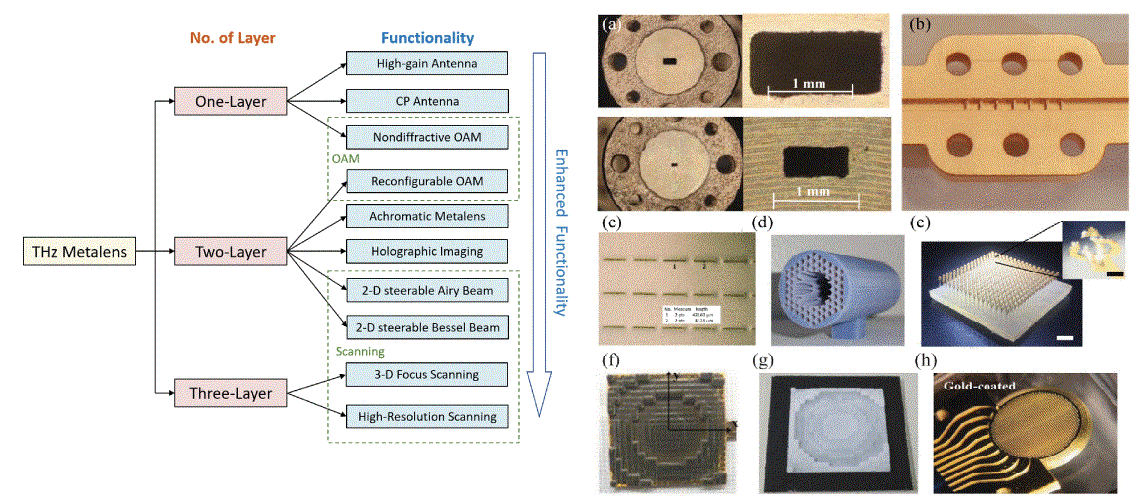
Three-dimensional (3-D) printing, also known as additive manufacturing, provides a novel and cost-effective approach for implementing microwave devices. With the rapid advancement and improved manufacturing resolution of the 3-D printing technology, additive manufacturing has enabled the design and fabrication of electronic devices in higher terahertz (THz) frequency bands, contributing to bridging the gap between microwaves and photonics. Simultaneously, metalenses have garnered significant attention due to their ability to shape electromagnetic (EM) wavefronts. Metalens technology offers a promising solution for wave focusing, surpassing traditional dielectric lenses with advantages such as reduced weight and low loss, particularly at THz frequencies. In this article, we present an overview of the development of 3-D-printed THz metalenses, ranging from single metalenses to dual-layer and trilayer configurations. The functionality of the metalenses becomes more powerful, from replacing conventional light-focusing dielectric lenses for single-layer metalenses, achieving 2-D beam scanning, holographic imaging, and reconfigurable orbital angular momentum (OAM) for dual-layer metalenses, to enabling 3-D focus scanning for trilayer metalenses. We also discuss practical measurement technologies for THz metalenses and briefly outline the prospective to propel the 3-D-printed metalens technology forward.
R. Lin, J. Yao, Z. H. Wang, M. K. Chen, and D. P. Tsai, “Bound States in the Continuum for Hot Electron Generation in Integrated-Resonant Metasurfaces,” The Journal of Physical Chemistry C 128, 18, 7661–7668 (2024)

Hydrogen, as a type of sustainable energy, has the potential to facilitate the achievement of carbon neutrality by replacing fossil fuels. Conventional plasmonic metal nanostructures as efficient photocatalysts have been employed to generate hot electrons, thus further facilitating hydrogen production. However, such structures only contain a single resonance mode, which restricts field enhancement and further limits the hot electron generation rate. In this work, we introduce a novel plasmonic integrated-resonant unit (IRU) that combines local and nonlocal modes and can excite a strong interaction between the modes to generate a quasi-bound state in the continuum (quasi-BIC) regime for enhancing the electric field. As a result, we achieved a maximum field enhancement factor of 168.5 at the excitation wavelength of 734 nm under period P = 750 nm. Correspondingly, the generation rate of hot electrons can exceed 6 × 10¹⁹ s–1, which is 2 orders of magnitude greater than that of the structure without IRU property. This research provides a strategic framework for the development of plasmonic nanostructures to enhance hot electron generation efficiency and photocatalytic activity, which is pivotal for the advancement of clean energy and the realization of a decarbonized future.
X. Liu, W. Li, T. Yamaguchi, Z. Geng, T. Tanaka, D. P. Tsai, M. K. Chen, “Stereo Vision Meta-lens Assisted Driving Vision,” ACS Photonics, 11, 7, 2546–2555 (2024). (Corresponding author) [IF = 6.5, Top 16.4% in Materials Science, Multidisciplinary, A].

Object detection and depth perception are key foundations of object tracking and machine navigation, facilitating a thorough perception and understanding of the surrounding environment. Currently, autonomous vehicles employ complex and bulky systems with high cost and energy consumption to achieve demanding multimodal vision. An imperative exists for the development of compact and reliable technology to enhance the cost-effectiveness and efficiency of autonomous driving systems. Meta-lens, a novel flat optical device, has an artificial nanoantenna array to manipulate the light properties. It is lightweight, ultrathin, and easy to integrate, making it suitable for various applications. We developed a stereo vision meta-lens imaging system for assisted driving vision, a comprehensive perception including imaging, object detection, instance segmentation, and depth information. The compact system comprises a band-pass filter, a stereo vision meta-lens, and a complementary metal oxide semiconductor (CMOS) sensor. In comparison to traditional two-camera-based stereo vision systems, the meta-lens stereo vision imaging system eliminates the need for distortion correction or camera calibration. A tailored data processing pipeline is proposed with an intensity and depth gradient cross-validation optimization mechanism and three deep learning modules for object detection, instance segmentation, and stereo matching foundations. Final assisted driving vision provides multimodal perception by integrating the raw image, instance labels, bounding boxes, segmentation masks in depth pseudo color, and depth information for each detected object. Our assisted driving vision based on a stereo meta-lens system offers a comprehensive perception for scene understanding of machines, benefiting the applications of human–computer interaction, machine navigation, autonomous driving, and augmented reality.
J. C. Zhang, M. K. Chen, Y. Fan, Q. Chen, S. Chen, J. Yao, X. Liu, S. Xiao and D. P. Tsai, "Miniature Tunable Airy Beam Optical Meta-device," Opto-Electronic Advances, 7, 2 (2024). (Co-First author) [IF = 15.3, Top 5% in Optics, A+].

Tunable Airy beams with controllable propagation trajectories have sparked interest in various fields, such as optical manipulation and laser fabrication. Existing research approaches encounter challenges related to insufficient compactness and integration feasibility, or they require enhanced tunability to enable real-time dynamic manipulation of the propagation trajectory. In this work, we present a novel method that utilizes a dual metasurface system to surpass these limitations, significantly enhancing the practical potential of the Airy beam. Our approach involves encoding a cubic phase profile and two off-axis Fresnel lens phase profiles across the two metasurfaces. The validity of the proposed strategy has been confirmed through simulation and experimental results. The proposed meta-device addresses the existing limitations and lays the foundation for broadening the applicability of Airy beams across diverse domains, encompassing light-sheet microscopy, laser fabrication, optical tweezers, etc.
Y. Fan, H. Liang, Y. Wang, S. Chen, F. Lai, M. K. Chen, S. Xiao, J. Li and D. P. Tsai, "Dual-channel quantum Meta-Hologram for display," Advanced Photonics Nexus, 3, 1, 016011 (2024).

Quantum technologies rely on creating and manipulating entangled sources, which are essential for quantum information, communication, and imaging. By integrating quantum technologies and all-dielectric metasurfaces, the performance of miniature display devices can be enhanced to a higher level. Miniature display technology, such as virtual reality display, has achieved original commercial success, and was initially applied to immersive games and interactive scenes. While the consumer market has quickly adopted this technology, several areas remain for improvement, including concerns around bulkiness, dual-channel display, and noise reduction. Here, we experimentally realize a quantum meta-hologram concept demonstration of a miniature display. We fabricate an ultracompact meta-hologram based on 1 μm thick titanium dioxide (TiO2). The meta-hologram can be remotely switched with heralding technique and is robust against noise with the quantum entangled source. The platform can alter the miniature display channel by manipulating heralding photons’ polarization, removing speckles and multiple reflective light noise, improving imaging contrast, and potentially decreasing device weight. Imaging contrast increases from 0.36 dB under speckle noise influences to 6.8 dB in quantum correlation imaging. This approach has the potential to miniaturize quantum displays and quantum communication devices.
H. Pan, M. K. Chen, D. P. Tsai, and S. Wang, "Nonreciprocal Pancharatnam-Berry metasurface for unidirectional wavefront manipulations," Optics Express 32, 15, 25632-25643 (2024) [IF = 3.2, Top 21.6% in Optics, B+].

Optical metasurfaces employing the Pancharatnam-Berry (PB) geometric phase, called PB metasurfaces, have been extensively applied to realize spin-dependent light manipulations. However, the properties of conventional PB metasurfaces are intrinsically limited by the Lorentz reciprocity. Breaking reciprocity can give rise to new properties and phenomena unavailable in conventional reciprocal systems. Here, we propose a mechanism to realize nonreciprocal PB metasurfaces of subwavelength thickness by using the Faraday magneto-optical (FMO) effect of yttrium iron garnet (YIG) material in synergy with the PB geometric phase of spatially rotating meta-atoms. Using full-wave numerical simulations and multipole analysis, we show that the metasurface composed of dielectric cylinders and a thin YIG layer can achieve high isolation of circularly polarized lights, attributed to the enhancement of the magneto-optical effect by the resonant Mie modes and Fabry-Pérot (FP) cavity mode. In addition, the metasurface can enable unidirectional wavefront manipulations of circularly polarized lights, including nonreciprocal beam steering and nonreciprocal beam focusing. The results contribute to the understanding of the interplay between nonreciprocity and geometric phase in light manipulations and can find applications in optical communications, optical sensing, and quantum information processing.
X. Liu, J. Zhang, B. Leng, Y. Zhou, J. Chen, T. Yamaguchi, T. Tanaka, and M. K. Chen, "Edge Enhanced Depth Perception with Binocular Meta-lens," Opto-Electronic Science, 3, 230033 (2024). (Corresponding Author)

The increasing popularity of the metaverse has led to a growing interest and market size in spatial computing from both academia and industry. Developing portable and accurate imaging and depth sensing systems is crucial for advancing next-generation virtual reality devices. This work demonstrates an intelligent, lightweight, and compact edge-enhanced depth perception system that utilizes a binocular meta-lens for spatial computing. The miniaturized system comprises a binocular meta-lens, a 532 nm filter, and a CMOS sensor. For disparity computation, we propose a stereo-matching neural network with a novel H-Module. The H-Module incorporates an attention mechanism into the Siamese network. The symmetric architecture, with cross-pixel interaction and cross-view interaction, enables a more comprehensive analysis of contextual information in stereo images. Based on spatial intensity discontinuity, the edge enhancement eliminates ill-posed regions in the image where ambiguous depth predictions may occur due to a lack of texture. With the assistance of deep learning, our edge-enhanced system provides prompt responses in less than 0.15 seconds. This edge-enhanced depth perception meta-lens imaging system will significantly contribute to accurate 3D scene modeling, machine vision, autonomous driving, and robotics development.
A. Kuznetsov, M. Brongersma, J. Yao, M. K. Chen, U. Levy, D. P. Tsai, N. Zheludev, A. Faraon, A. Arbabi, N. Yu, D. Chanda, K. Crozier, A. V. Kildishev, H. Wang, J. Yang, J. Valentine, P. Genevet, J. Fan, O Miller, A. Majumdar, J. Fröch, D. Brady, F. Heide, A. Veeraraghavan, N. Engheta, A. Alù, A. Polman, H. Atwater, P. Thureja, R. Paniagua-Dominguez, S. T. Ha, A. Barreda, J. Schuller, I. Staude, G. Grinblat, Y. Kivshar, S. Peana, S. Yelin, A. Senichev, V. M. Shalaev, S. Saha, A. Boltasseva, J. Rho, D. K. Oh, J. Kim, J. Park, R. Devlin, R. Pala, "Roadmap for optical metasurfaces," ACS Photonics, 10.1021/acsphotonics.3c00457 (2024) [IF = 6.5, Top 16.4% in Materials Science, Multidisciplinary, A].

Metasurfaces have recently risen to prominence in optical research, providing unique functionalities that can be used for imaging, beam forming, holography, polarimetry, and many more, while keeping device dimensions small. Despite the fact that a vast range of basic metasurface designs has already been thoroughly studied in the literature, the number of metasurface-related papers is still growing at a rapid pace, as metasurface research is now spreading to adjacent fields, including computational imaging, augmented and virtual reality, automotive, display, biosensing, nonlinear, quantum and topological optics, optical computing, and more. At the same time, the ability of metasurfaces to perform optical functions in much more compact optical systems has triggered strong and constantly growing interest from various industries that greatly benefit from the availability of miniaturized, highly functional, and efficient optical components that can be integrated in optoelectronic systems at low cost. This creates a truly unique opportunity for the field of metasurfaces to make both a scientific and an industrial impact. The goal of this Roadmap is to mark this “golden age” of metasurface research and define future directions to encourage scientists and engineers to drive research and development in the field of metasurfaces toward both scientific excellence and broad industrial adoption.
Y. He, S. Shi, C. Yao, M. K Chen, and F. Qi, "Computational simulation of multi-wavelength lightfield thermometry based on chromatic meta-lens," Optics Letters, 49, 4, 961-964 (2024). [IF = 3.1, Top 24% in Optics, B+].

This Letter proposes a light-field meta-lens multi-wavelength thermometry (MMT) system that is capable of modulating a full-spectrum incident radiation into four separate wavelength beams. The chromatic meta-lens is designed using finite-difference time-domain (FDTD) software to function as a filter, ensuring its ability to separate four wavelengths. The chromatic meta-lens is positioned on the back focus plane of the main lens to replace the microlens used in traditional light-field systems and simplify the overall system. After detecting the acquired wavelengths and intensities of the image on photodiodes, a raw multispectral image can be decoupled and processed using the Chameleon swarm algorithm (CSA). Four full-spectrum incident radiations corresponding to four temperature characteristic curves are detected. The high accuracy of the reverse temperature calculation enables the measurement of surface high-temperature distribution with precision.
S. Lin, Y. Liang, J. Zhang, M. K. Chen, and D. P. Tsai, "Controllable flat bands via non-Hermiticity," Applied Physics Letters, 123, 221103 (2023). [IF = 3.5, Top 29.6% in Physics, Applied, B+].

We propose a flexible way to design and control flatbands in photonic systems with balanced gain and loss. We investigate a lattice model constructed from two parity-time (PT)-symmetric dimer systems, which give rise to two flatbands. By tuning the non-Hermiticity in this composite lattice, the flatbands can be manipulated into the regime of the dispersive bands and remain completely flat, which is protected by the PT symmetry. When reaching the exceptional point (EP), where two flatbands merge into one flatband, and surpassing the EP, one of the flatbands transforms into a partial flatband, while the imaginary parts of the band structure also appear in the form of multiple flatbands. We also discover that dimensionality plays an important role in controlling flatbands in a non-Hermitian manner. Our results could be potentially important for manipulating the dynamics and localization of light in non-Hermitian open systems.
Y.-H. Chia, W.-H. Liao, S. Vyas, C. H. Chu, T. Yamaguchi, X. Liu, T. Tanaka, Y.-Y. Huang, M. K. Chen, W.-S Chen, D. P. Tsai, and Y. Luo, "In-vivo intelligent fluorescence endo-microscopy by varifocal meta-device and deep learning," Advanced Science, 11, 2307837 (2023). (Corresponding Author) [IF = 14.3, Top 6.6% in Materials Science, Multidisciplinary, A+].

Endo-microscopy is crucial for real-time 3D visualization of internal tissues and subcellular structures. Conventional methods rely on axial movement of optical components for precise focus adjustment, limiting miniaturization and complicating procedures. Meta-device, composed of artificial nanostructures, is an emerging optical flat device that can freely manipulate the phase and amplitude of light. Here, an intelligent fluorescence endo-microscope is developed based on varifocal meta-lens and deep learning (DL). The breakthrough enables in vivo 3D imaging of mouse brains, where varifocal meta-lens focal length adjusts through relative rotation angle. The system offers key advantages such as invariant magnification, a large field-of-view, and optical sectioning at a maximum focal length tuning range of ≈2 mm with 3 µm lateral resolution. Using a DL network, image acquisition time and system complexity are significantly reduced, and in vivo high-resolution brain images of detailed vessels and surrounding perivascular space are clearly observed within 0.1 s (≈50 times faster). The approach will benefit various surgical procedures, such as gastrointestinal biopsies, neural imaging, brain surgery, etc.
X. Liu, Z. Zhao, S. Xu, J. Zhang, Y. Zhou, Y. He, T. Yamaguchi, H. Ouyang, T. Tanaka, M. K Chen, S. Shi, F. Qi and D. P. Tsai, "Meta-lens Particle Image Velocimetry," Advanced Materials, 202310134, (2023). (Corresponding Author) [IF = 27.4, Top 1.2% in Chemistry, Multidisciplinary, A+].

Fluid flow behavior is visualized through particle image velocimetry (PIV) for understanding and studying experimental fluid dynamics. However, traditional PIV methods require multiple cameras and conventional lens systems for image acquisition to resolve multi-dimensional velocity fields. In turn, it introduces complexity to the entire system. Meta-lenses are advanced flat optical devices composed of artificial nanoantenna arrays. It can manipulate the wavefront of light with the advantages of ultrathin, compact, and no spherical aberration. Meta-lenses offer novel functionalities and promise to replace traditional optical imaging systems. Here, a binocular meta-lens PIV technique is proposed, where a pair of GaN meta-lenses are fabricated on one substrate and integrated with a imaging sensor to form a compact binocular PIV system. The meta-lens weigh only 116 mg, much lighter than commercial lenses. The 3D velocity field can be obtained by the binocular disparity and particle image displacement information of fluid flow. The measurement error of vortex-ring diameter is ≈1.25% experimentally validates via a Reynolds-number (Re) 2000 vortex-ring. This work demonstrates a new development trend for the PIV technique for rejuvenating traditional flow diagnostic tools toward a more compact, easy-to-deploy technique. It enables further miniaturization and low-power systems for portable, field-use, and space-constrained PIV applications.
X. Liu, M. K. Chen, and D. P. Tsai, "Photonic Meta-Neuron," Laser & Photonics Reviews, 2300456, (2023). (Corresponding Author) [IF = 9.8, Top 9.1% in Optics, A+].

Artificial intelligence (AI) has witnessed a growing integration into numerous domains of production and daily life. Such powerful AI has emerged from electronic simulations of human neurons. In the post-Moore era, Von-Neumann architecture and high energy consumption have posed challenges for the advancement of electronic AI. In light of these limitations, a new concept of photonic meta-neurons is proposed, which holds the potential to address these issues by optically emulating biological neurons through the utilization of metasurfaces. Meta-neurons could enable flexible modulation of photonic signals through hierarchical and high-dimensional manipulation of light fields. The flat and thin design of the meta-neuron reduces the spatial constraints. In comparison to electronic AI, meta-neurons offer a range of desirable attributes, including the potential for achieving light-speed processing, parallel computing, clean energy utilization, high energy efficiency, and an in-memory computing architecture. The meta-neuron concept can serve as a promising starting point for photonic AI. With its advantages of high-speed computing and environmental friendliness, meta-neurons will have broad applications in various fields, particularly for latency-critical tasks.
J. Zhang, Y. Fan, J. Yao, M. K. Chen, S. Lin, Y. Liang, B. Leng, and D. P. Tsai, “Programmable optical meta-holograms,” Nanophotonics, 13.8: 1201-1217 (2023). (Co-First author) [IF = 6.5, Top 17.3% in Physics, Applied, A].

The metaverse has captured significant attention as it provides a virtual realm that cannot be experienced in the physical world. Programmable optical holograms, integral components of the metaverse, allow users to access diverse information without needing external equipment. Meta-devices composed of artificially customized nano-antennas are excellent candidates for programmable optical holograms due to their compact footprint and flexible electromagnetic manipulation. Programmable optical meta-holograms can dynamically alter reconstructed images in real-time by directly modulating the optical properties of the metasurface or by modifying the incident light. Information can be encoded across multiple channels and freely selected through switchable functionality. These advantages will broaden the range of virtual scenarios in the metaverse, facilitating further development and practical applications. This review concentrates on recent advancements in the fundamentals and applications of programmable optical meta-holograms. We aim to provide readers with general knowledge and potential inspiration for applying programmable optical meta-holograms, both intrinsic and external ways, into the metaverse for better performance. An outlook and perspective on the challenges and prospects in these rapidly growing research areas are provided.
J. C. Zhang, G.-B Wu, M. K. Chen, X. Che, Y. Liang, D. P. Tsai, and C. H. Chan, "Electromagnetic Wave Tailoring: from One Dimension to Multiple Dimensions," Electromagnetic Science, 1, 3, 0030131, (2023). (Co-First author)
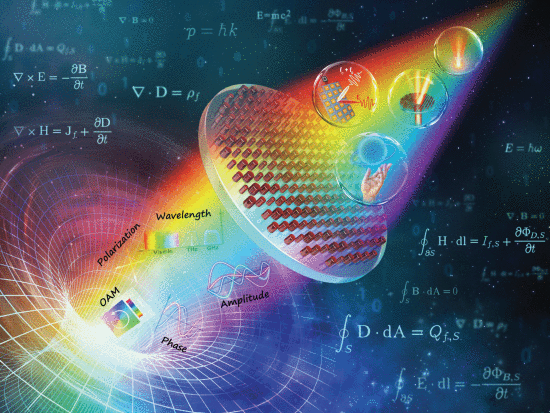
Metasurfaces, known as arrays of subwavelength antennas, provide a wide range of options for controlling electromagnetic waves and effectively reducing the size and complexity of electromagnetic devices. Metasurfaces can manipulate five degrees of freedom of electromagnetic waves: amplitude, wavelength, polarization, phase, and orbital angular momentum; these are customized to provide a variety of remarkable functionalities, including metalenses and meta-holograms. With the advancement of simultaneously manipulating two or more degrees of freedom of the electromagnetic field, there has been a significant increase in the amount of information that electromagnetic waves can carry. The wavefront can be precisely tailored for specific applications, facilitating new possibilities for innovative applications with high performance and diverse functionalities, such as full-color vectorial meta-holograms achieved by a single-layer metasurface. This review briefly overviews the latest developments in metasurfaces, categorizing them based on their various degrees of freedom used to manipulate the electromagnetic waves. The use of metasurfaces to control electromagnetic waves from one dimension to multiple dimensions is systematically explored. The challenges and opportunities for future research are discussed.
J. Zhang, M. K. Chen, Y. Liang, X. Hong, M. Wang, Y. Cheng, X. Liu, D. P. Tsai, and S. W. Pang, “Nanoimprint Meta-Device for Chiral Imaging,” Advanced Functional Materials, 33, 2306422 (2023). (Co-First author) [IF = 18.5, Top 3.9 in Chemistry, Multidisciplinary, A+].

The polarization of light is a valuable information channel that has been studied extensively in optical devices. There has been limited progress in developing low-refractive index contrast and large-scale chiral meta-devices that are easy to integrate and mass-produce. In this image, a chiral imaging meta-device with a large area and broadband chirality control is experimentally demonstrated. The centimeter-scale Moiré meta-device is achieved using nanoimprint technology. The Poynting vector and singularity features in the near field and chiral optical response in the far field are discussed. The proposed Moiré meta-devices can achieve circular dichroism (CD) of more than 10%. Further chiral imaging harnessing CD mechanisms are demonstrated, which may lead to significant potential in various fields, including encryption and security, materials science, biochemistry, and medicine.
J. Yao, R. Lin, X. Che, Y. Fan, Y. Liang, J. Zhang, M. K. Chen, and D. P. Tsai, "Integrated-resonant units for phase compensation and efficiency enhancements in achromatic meta-lens," ACS Photonics, 10, 12, 4273-4281, (2023). (Corresponding Author) [IF = 6.5, Top 16.4% in Materials Science, Multidisciplinary, A].

Achromatic meta-lenses have shown great promise in ultracompact and full-color optical devices. Their performances, including size, bandwidth, and numerical aperture, are originally restricted by the phase compensation provided by functional meta-atoms. Integrated-resonant units (IRUs), associating various meta-atoms, resonant modes, and functionalities into one supercell, are efficient candidates for large phase compensation in broadband achromatic meta-lenses. In this work, we propose nonlocal plasmonic IRUs with multiple nanorods to boost the phase compensation in an achromatic meta-lens over the visible band ranging from 400 to 660 nm. By exciting local and nonlocal plasmonic resonances and manipulating their interactions, the resonance phase can be flexibly controlled, achieving an effective group delay range (Δφmax – Δφmin)/Δω of 42.5 fs. Spherical and spiral achromatic meta-lenses are both demonstrated. To demonstrate the functionality of IRUs, an efficiency-enhanced achromatic meta-lens composed of six types of dielectric IRUs is designed by tailoring the field distribution and phase difference between two in-plane orthogonal directions. This work offers a novel design scheme for large-scale high-efficiency achromatic meta-lenses and facilitates their practical applications in advanced imaging and display.
B. Leng, M. K. Chen, and D. P. Tsai, "Design, Fabrication, and Imaging of Meta-devices", Acta Optica Sinica 43(08), 0822064 (2023)

Meta-devices, the conceptual expansion of metasurfaces composed of sub-wavelength artificial nanostructures, are the advanced optical devices that have drawn much attention in recent years. Compared with traditional bulky optical components, which can shape the electromagnetic fields via gradual phase accumulation through propagation inside the medium, meta-devices provide new degrees of freedom for manipulating the amplitude, phase, and polarization of the incident light at a two-dimensional flat interface. The light-matter interaction in the metasurfaces is achieved in sub-wavelength nanostructures, which endow the metasurfaces with inherent features of compact size. Besides their flat and compact dimension, the main distinctions between metasurfaces and their conventional counterparts are their multifunctionality, tenability, and easy-to-integration. The above unprecedented characteristics give the metasurfaces great potential. Versatile metasurface technologies have been proposed to fulfill the demands for various optical applications. Meta-optics opens a new era of flat optical components.
M. K. Chen, and T. Tanaka. “Metalenses for revolutionary imaging.” Photonics Insights, 2(1), C01 (2023) (First author/ Corresponding Author)
Imaging tasks are becoming increasingly complex due to continuous high-tech advancements and the proliferation of personal electronics. From the high-resolution displays on our smartphones and laptops to advanced medical imaging systems, imaging systems are constantly being pushed to their limits. As complexity increases, more advanced optics are required. The development of new optical devices is an ongoing process as researchers and engineers strive to create better and more efficient ways to manipulate light. From tiny microlenses that can focus light onto a single point to advanced imaging systems that can capture ultrahigh-resolution images, the field of optics is constantly evolving. Metalenses show unique advantages in this trend because their artificial surfaces comprise customized meta-atoms, providing the potential for compact and efficient light manipulation.
J. Yao, M. K. Chen, R. Lin, D. P. Tsai, and K-M Luk, “Tunable water-based meta-lens,” Advanced Optical Materials, 2300130 (2023). [IF = 8, Top 10% in Optics, A+].

Water, the source of life, is a more abundant, low-cost, and environment-friendly candidate material for tunable meta-devices compared to conventional approaches in the microwave region. Wavefront shaping can be flexibly manipulated by adjusting the shapes and temperature of water-based meta-atoms, but individual control of each meta-atom is complicated and inconvenient, especially for continuous tunability. Here, we propose a design strategy based on the phase compensation mechanism to continuously tune the properties of water-based meta-lenses at 5 GHz. Integrated-resonant units (IRUs) with coupled water pillars are carefully designed to effectively tailor the balance between polarization conversion efficiency and phase compensation. By changing the filling height of water in the designed meta-lens from 10 to 60 mm, the focal length can be tuned from 228 to 424 mm. The off-axis focusing of the meta-lens is also demonstrated in which the deflection angle is adjustable from around 0° to 5°. This work will pave the way for designing tunable water-based meta-devices and facilitating their applications in microwave imaging systems.
J. Yao, R. Lin, M. K. Chen, and D. P. Tsai, “Integrated-resonant metadevices: a review,” Advanced Photonics, 5 (2), 024001 (2023). [IF = 20.6, Top 4.1% in Optics, A+].

Integrated-resonant units (IRUs), associating various meta-atoms, resonant modes, and functionalities into one supercell, have been promising candidates for tailoring composite and multifunctional electromagnetic responses with additional degrees of freedom. Integrated-resonant metadevices can overcome many bottlenecks in conventional optical devices, such as broadband achromatism, efficiency enhancement, response selectivity, and continuous tunability, offering great potential for performant and versatile application scenarios. We focus on the recent progress of integrated-resonant metadevices. Starting from the design principle of IRUs, a variety of IRU-based characteristics and subsequent practical applications, including achromatic imaging, light-field sensing, polarization detection, orbital angular momentum generation, metaholography, nanoprinting, color routing, and nonlinear generation, are introduced. Existing challenges in this field and opinions on future research directions are also provided.
M. K. Chen, J. Zhang, C. W. Leung, L. Sun, Y. Fan, Y. Liang, J. Yao, X. Liu, J. Yuan, Y. Xu, D. P. Tsai, and S. W. Pang, “Chiral-magic angle of nanoimprint meta-device”, Nanophotonics, 12, 13, 2479-2490(2023). (First author) [IF = 6.5, Top 17.3% in Physics, Applied, A].

The magic angle of Twistronics has attracted a lot of attention because of its peculiar electrical characteristics. Moiré patterns formed by the superlattice of a twisted bilayer change overall physical properties. Circular dichroism can also be manipulated through the generated moiré pattern. Here, we report a polymer-based twisted bilayer meta-device fabricated by multilayer nanoimprint technology and study the magic angle of chirality. The superlattice of the bilayer meta-device creates moiré patterns and brings unique chiral optical responses. The bilayer nanoimprint technology is developed for metasurfaces with relative twist angles. Via the twist angle control, polymer materials with a low refractive index can manipulate the electric field of the light and reveal the chiral magic angle. Moreover, the shape of the meta-atoms plays a key role in chiral magic angle tuning. The chirality engineering by the reported nanoimprint technology and chiral meta-devices may contribute to applications in chiral imaging, biomedical sensing, lasing, and tunable optical devices.
J. Zhang, G. -B. Wu, M. K. Chen, X. Liu, K. F. Chan, D. P. Tsai, and C. H. C, “A 6G Meta-device for 3D Varifocal”, Science Advances, 9(4), eadf8478 (2023) (Co-first author) [IF = 11.7, Top 7.4% in Multidisciplinary Sciences].

The sixth-generation (6G) communication technology is being developed in full swing and is expected to be faster and better than the fifth generation. The precise information transfer directivity and the concentration of signal strength are the key topics of 6G technology. We report the synthetic phase design of rotary doublet Airy beam and triplet Gaussian beam varifocal meta-devices to fully control the terahertz beam’s propagation direction and coverage area. The focusing spot can be delivered to arbitrary positions in a two-dimensional plane or a three-dimensional space. The highly concentrated signal can be delivered to a specific position, and the transmission direction can be adjusted freely to enable secure, flexible, and high-directivity 6G communication systems. This technology avoids the high costs associated with extensive use of active components. 6G communication systems, wireless power transfer, zoom imaging, and remote sensing will benefit from large-scale adoption of such a technology.
Z. Wang, Y. Liang, J. Qu, M. K. Chen, M. Cui, Z. Cheng, J. Zhang, J. Yao, S. Chen, D. P. Tsai, and C. Yu, “Plasmonic bound states in the continuum for unpolarized weak spatially coherent light”, Photonics Research, 11(2), 260-269 (2023) [IF = 6.6, Top 10.9% in Optics, A]

Plasmonic resonances empowered by bound states in the continuum (BICs) offer unprecedented opportunities to tailor light–matter interaction. However, excitation of high quality-factor (Q-factor) quasi-BICs is often limited to collimated light at specific polarization and incident directions, rendering challenges for unpolarized focused light. The major hurdle is the lack of robustness against weak spatial coherence and poor polarization of incident light. Here, addressing this limitation, we demonstrate sharp resonances in symmetric plasmonic metasurfaces by exploiting BICs in the parameter space, offering ultraweak angular dispersion effect and polarization-independent performance. Specifically, a high- Q(≈71) resonance with near-perfect absorption (>90%) is obtained for the input of unpolarized focused light covering wide incident angles (from 0° to 30°). Also, giant electric and magnetic field enhancement simultaneously occurs in quasi-BICs. These results provide a way to achieve efficient near-field enhancement using focused light produced by high numerical aperture objectives.
Y. Tang, Y. Liang, J. Yao, M. K. Chen, S. Lin, Z. Wang, J. Zhang, X. G. Huang, C. Yu, and D. P. Tsai, “Chiral bound states in the continuum in plasmonic metasurfaces”, Laser & Photonics Reviews, 2200597 (2023) [IF = 9.8, Top 9.1% in Optics, A+].

Bound states in the continuum (BICs) offer novel mechanisms to boost the quality factor (Q-factor) of resonances. Unfortunately, current studies on chiral BICs metasurfaces suffer from a fundamental trade-off between Q-factor and circular dichroism (CD), presenting a significant hurdle that severely limits the independent control between CD and Q-factors. Here, 3D plasmonic metasurfaces are numerically demonstrated that overcome the trade-off and offer high-Q quasi-BIC resonances (Q ≈ 938) with strong CD (≈0.67) in the mid-infrared. These metasurfaces are made of integrated-resonance units consisting of a twisted vertical split-ring resonator (VSRR) and a wall. Importantly, this dissimilar dimer configuration unlocks a new degree of freedom to decouple the Q-factor and CD, that is, the Q-factor and CD can be relatively independently manipulated by the height of the wall and the twisted angle of the VSRR, respectively. These results provide novel paradigms to manipulate advanced chiroptical responses, with various applications that require strong CD with enhanced light–matter interaction.
X. Liu, M. K. Chen, C. H. Chu, J. Zhang, B. Leng, T. Yamaguchi, T. Tanaka, D. P. Tsai, “Underwater Binocular Meta-lens,” ACS Photonics, 10, 7, 2382-2389. (2023). (Corresponding Author) [IF = 6.5, Top 16.4% in Materials Science, Multidisciplinary, A].

Underwater optics in all-aquatic environments is vital for environmental management, biogeochemistry, phytoplankton ecology, benthic processes, global change, etc. Many optical techniques of observational systems for underwater sensing, imaging, and applications have been developed. For the demands of compact, miniaturized, portable, lightweight, and low-energy consumption, a novel underwater binocular depth-sensing and imaging meta-optic device is developed and reported here. A GaN binocular meta-lens is specifically designed and fabricated to demonstrate underwater stereo vision and depth sensing. The diameter of each meta-lens is 2.6 mm, and the measured distance between the two meta-lens centers is 4.04 mm. The advantage of our binocular meta-lens is no need of distortion correction or camera calibration, which is necessary for traditional two-camera stereo vision systems. Based on the experimental results, we developed the generalized depth calculation formula for all-size binocular vision systems. With deep-learning support, this stereo vision system can realize the fast underwater object’s depth and image computation for real-time processing capability. Our artificial intelligent imaging results show that depth measurement accuracy is down to 50 μm. Besides the aberration-free advantage of flat meta-optic components, the intrinsic superhydrophobicity properties of our nanostructured GaN meta-lens enable an antiadhesion, stain-resistant, and self-cleaning novel underwater imaging device. This stereo vision binocular meta-lens will significantly benefit underwater micro/nanorobots, autonomous submarines, machine vision in the ocean, marine ecological surveys, etc.
M. K. Chen, X. Liu,Y. Wu, J. Zhang, J. Yuan, Z. Zhang, and D. P. Tsai, "A Meta-device for Intelligent Depth Perception", Advanced Materials, 202107465 (2022). (First author) [IF = 27.4, Top 1.2% in Chemistry, Multidisciplinary, A+].

The optical illusion affects depth-sensing due to the limited and specific light-field information acquired by single-lens imaging. The incomplete depth information or visual deception would cause cognitive errors. To resolve this problem, an intelligent and compact depth-sensing meta-device that is miniaturized, integrated, and applicable for diverse scenes in all light levels is demonstrated. The compact and multifunction stereo vision system adopts an array with 3600 achromatic meta-lenses and a size of 1.2 × 1.2 mm2 to measure the depth over a 30 cm range with deep-learning support. The meta-lens array can act as multiple imaging lenses to collect light field information. It can also work with a light source as an active optical device to project a structured light. The meta-lens array can serve as the core functional component of a light-field imaging system under bright conditions or a structured-light projection system in the dark. The depth information in both ways can be analyzed and extracted by the convolutional neural network. This work provides a new avenue for the applications such as autonomous driving, machine vision, human–computer interaction, augmented reality, biometric identification, etc.
M. K. Chen, X. Liu, Y. Sun and D. P. Tsai, "Artificial Intelligence in Meta-optics," Chemical Reviews, 122, 19, 15356 (2022). (First author) [IF = 51.5, Top 1st in Chemistry, Multidisciplinary, A+].

Recent years have witnessed promising artificial intelligence (AI) applications in many disciplines, including optics, engineering, medicine, economics, and education. In particular, the synergy of AI and meta-optics has greatly benefited both fields. Meta-optics are advanced flat optics with novel functions and light-manipulation abilities. The optical properties can be engineered with a unique design to meet various optical demands. This review offers comprehensive coverage of meta-optics and artificial intelligence in synergy. After providing an overview of AI and meta-optics, we categorize and discuss the recent developments integrated by these two topics, namely AI for meta-optics and meta-optics for AI. The former describes how to apply AI to the research of meta-optics for design, simulation, optical information analysis, and application. The latter reports the development of the optical Al system and computation via meta-optics. This review will also provide an in-depth discussion of the challenges of this interdisciplinary field and indicate future directions. We expect that this review will inspire researchers in these fields and benefit the next generation of intelligent optical device design.
J. Yao, J.-Y. Ou, V. Savinov, M. K. Chen, H. Y. Kuo, N. I. Zheludev, and D. P. Tsai, "Plasmonic anapole metamaterial for refractive index sensing," PhotoniX, 3, 1, 23 (2022). [IF = 15.7, Top 5% in Optics, A+].

Electromagnetic anapole mode is a nonradiative state of light originating from the deconstructive interference of radiation of the oscillating electric and toroidal dipole moments. The high quality anapole-related resonances can be used in enhancing nonlinear electromagnetic properties of materials and in sensor applications. In this work, we experimentally demonstrate plasmonic anapole metamaterial sensor of environmental refractive index in the optical part of the spectrum. Our results show that the sensor exhibits high sensitivity to the ambient refractive index at the level of 330 nm/RIU and noise floor of 8.7 × 10⁻⁵ RIU. This work will pave the way for applications of anapole metamaterials in biosensing and spectroscopy.
M. K. Chen, C. H. Chu, X. Liu, J. Zhang, L. Sun, J. Yao, Y. Fan, Y. Liang, T. Yamaguchi, T. Tanaka, and D. P. Tsai, "Meta-Lens in the Sky," IEEE Access, 10, 46552-46557, (2022). (First author) (IF: 3.476)

Meta-lenses are advanced optical devices composed of artificial nano-antenna arrays. Its flat, light-weight, ultra-thin, compact, customizable, and easy-to-integrate advantages enable widely potential usages in new demands. We demonstrate a GaN-based polarization-independent meta-lens-based camera on a drone. The diameter of the meta-lens is 2.6 mm, and the measured focal length is 5.03 mm under the 532 nm light incident. An array of the 750 nm height cylindrical nano-antennas with various sizes of the meta-lens provides the 2π phase modulation of the focusing phase distribution. The meta-lens is integrated with an image sensor and mounted on the drone to realize the aerial photography and landing assistance. By taking images of the specific pattern on the ground at different heights through the meta-lens, the flying height of the drone can be detected for landing and flying. We trust meta-lens-camera can reduce the weight burden for prolonging flight time. We believe the meta-lens-based optical devices for imaging and sensing is an important key for micro/nano-robots, micro air vehicles, and intelligent sensing devices in the future.
M. L. Tseng, M. Semmlinger, M. Zhang, T.-T. Huang, C. Arndt, J. Yang, H. Y. Kuo, V.-C. Su, M. K. Chen, C. H. Chu, B. Cerjan, D. P. Tsai, P. Nordlander, and N. J. Halas, "Vacuum-Ultraviolet Nonlinear Meta-lens", Science Advances, 8, 16 (2022). [IF = 11.7, Top 7.4% in Multidisciplinary Sciences].

Vacuum ultraviolet (VUV) light plays an essential role across science and technology, from molecular spectroscopy to nanolithography and biomedical procedures. Realizing nanoscale devices for VUV light generation and control is critical for next-generation VUV sources and systems, but the scarcity of low-loss VUV materials creates a substantial challenge. We demonstrate a metalens that both generates—by second-harmonic generation—and simultaneously focuses the generated VUV light. The metalens consists of 150-nm-thick zinc oxide (ZnO) nanoresonators that convert 394 nm (~3.15 eV) light into focused 197-nm (~6.29 eV) radiation, producing a spot 1.7 μm in diameter with a 21-fold power density enhancement as compared to the wavefront at the metalens surface. The reported metalens is ultracompact and phase-matching free, allowing substantial streamlining of VUV system design and facilitating more advanced applications. This work provides a useful platform for developing low-loss VUV components and increasing the accessibility of the VUV regime.
Y. Luo, M. L. Tseng, S. Vyas, T.-Y. Hsieh, J.-C. Wu, S.-Y. Chen, H.-F. Peng, V.-C. Su, T.-T. Huang, H. Y. Kuo, C. H. Chu, M. K. Chen, J.-W. Chen, Y.-C. Chen, K.-Y. Huang, C.-H. Kuan, X. Shi, H. Misawa, D. P. Tsai, "Metalens lightsheet fluorescence microscopy for in vivo imaging", Nanophotonics, 11(9): 1949-1959 (2022). [IF = 6.5, Top 17.3% in Physics, Applied, A].

Light-sheet fluorescent microscopy has become the leading technique for in vivo imaging in the fields of disease, medicine, and cell biology research. However, designing proper illumination for high image resolution and optical sectioning is challenging. Another issue is geometric constraints arising from the multiple bulky components for illumination and detection. Here, we demonstrate that those issues can be well addressed by integrating nanophotonic meta-lens as the illumination component for LSFM. The meta-lens is composed of 800-nm-thick GaN nanostructures and is designed for a light-sheet well-adapted to biological specimens such as the nematode Caenorhabditis elegans (C. elegans). With the meta-lens, the complexity of the LSFM system is significantly reduced, and it is capable of performing multicolor fluorescent imaging of live C. elegans with cellular resolution. Considering the miniature size and plane geometry of the meta-lens, our system enables a new design for LSFM to acquire in vivo images of biological specimens with high resolution.
Y. Luo, M. L. Tseng, S. Vyas, H. Y. Kuo, C. H. Chu, M. K. Chen, H.-C. Lee, W.-P. Chen, V.-C. Su, H. Misawa, D. P. Tsai,and P.-C.Yang, "Metasurface-Based Abrupt Autofocusing Beam for Biomedical Applications", Small Methods, 6, 2101228, (2022). [IF = 10.7, Top 17.3% in Materials Science, Multidisciplinary, A].

Manipulation and precise delivery of optical energies in the regions of interest within specimens require different strategies. Hence, proper control of input beam parameters is a prerequisite. One of the prominent methods is metasurface optics, capable of crafting properties of light at nanoscales. Here, the generation of an abrupt autofocusing (AAF) beam by a nanophotonic metasurface for biomedical applications is demonstrated. Fluorescence guided laser microprofiling of mouse cardiac samples is experimentally investigated, using the AAF beam to deliver optical energy selectively to specific locations. In addition, photocoagulation of ex vivo swine skin tissue is performed and observed through optical coherence tomography. The results show great potentials for integrating metasurface optics to realize miniature laser surgery instruments for wide applications in biomedicine.
Y. Shi, Y. Wu, L. K. Chin, M.-K. Chen, S. Wang, Y. Zhang, X. Zhou, H. Cai, Y. Yu, P. H. Yap, W. Ser, T. T. B. Nguyen, K. Wang, J. Liao, F. Wang, B. Liedberg, C. T. Chan, Y. Kivshar, D. P. Tsai, and A. Q. Liu, "Multifunctional Virus Manipulation with Large-Scale Arrays of All-Dielectric Resonant Nanocavities", Laser & Photonics Reviews, 16, 5, 2100197 (2022). [IF = 9.8, Top 9.1% in Optics, A+].

Spatial manipulation of a precise number of viruses for host cell infection is essential for the extensive studies of virus pathogenesis and evolution. Albeit optical tweezers have been advanced to the atomic level via optical cooling, it is still challenging to efficiently trap and manipulate arbitrary number of viruses in an aqueous environment, being restricted by insufficient strength of optical forces and a lack of multifunctional spatial manipulation techniques. Here, by employing the virus hopping and flexibility of moving the laser position, multifunctional virus manipulation with a large trapping area is demonstrated, enabling single or massive (a large quantity of) virus transporting, positioning, patterning, sorting, and concentrating. The enhanced optical forces are produced by the confinement of light in engineered arrays of nanocavities by fine tuning of the interference resonances, and this approach allows trapping and moving viruses down to 40 nm in size. The work paves the way to efficient and precise manipulation of either single or massive groups of viruses, opening a wide range of novel opportunities for virus pathogenesis and inhibitor development at the single-virus level.
Y. Fan, M. K. Chen, M. Qiu, R.-J. Lin, Y. Xu, J. Wen, X. Liu, W. Jin, D. P. Tsai, and D. Lei, "Experimental demonstration of genetic algorithm based metalens design for generating side-lobe-suppressed, large depth-of-focus light sheet," Laser & Photonics Reviews, 16, 2100425 (2021). (Co-first author) [IF = 9.8, Top 9.1% in Optics, A+].

Light-sheet fluorescence microscopy (LSFM), sectioning biological samples by illuminating a thin slice of fluorescently labelled live cells or tissues typically with a Bessel beam, requires dithering the beam to form a two-dimensional (2D) light sheet. It usually suffers from severe phototoxicity and low signal-to-noise ratio (SNR) mainly caused by the side-lobe illumination generating unfavorable bio-fluorescence from the adjacent tissues. Here, the first proof-of-concept experimental implementation of genetic algorithm (GA) generated metalens is provided to address the above challenges. It is shown that a dithering-free 2D light sheet produced by a GaN-based metalens with GA-generated prism-like yet non-analytical phase profile, can significantly suppress the side-lobe intensity of the resultant light sheet down to 7.3% of the main lobe intensity and also extends its depth of focus up to 4 mm, surpassing the latest results reported in the literature. When applied under two-photon excitation, the light sheet exhibits an enhanced axial resolution and SNR. These results demonstrate the feasibility of applying artificial intelligence generated metalens in addressing some special issues encountered by conventional analytical design approaches, and the metalens device produced here could find an important role in fast-LSFM-based large-scale bioimaging applications without mechanical dithering.
H. Y. Kuo, S. Vya, C. H. Ch, M. K. Chen, X. Shi, H. Misawa, Y.-J. Lu, Y. Luo3, and D. P. Tsai, "Cubic Phase Metasurface for Three-Dimensional Optical Manipulation", Nanomaterials, 11, 1730-43 (2021). [IF = 4.4, Top 34.6% in Chemistry, Multidisciplinary, B].

The optical tweezer is one of the important techniques for contactless manipulation in biological research to control the motion of tiny objects. For three-dimensional (3D) optical manipulation, shaped light beams have been widely used. Typically, spatial light modulators are used for shaping light fields. However, they suffer from bulky size, narrow operational bandwidth, and limitations of incident polarization states. Here, a cubic-phase dielectric metasurface, composed of GaN circular nanopillars, is designed and fabricated to generate a polarization-independent vertically accelerated two-dimensional (2D) Airy beam in the visible region. The distinctive propagation characteristics of a vertically accelerated 2D Airy beam, including non-diffraction, self-acceleration, and self-healing, are experimentally demonstrated. An optical manipulation system equipped with a cubic-phase metasurface is designed to perform 3D manipulation of microscale particles. Due to the high-intensity gradients and the reciprocal propagation trajectory of Airy beams, particles can be laterally shifted and guided along the axial direction. In addition, the performance of optical trapping is quantitatively evaluated by experimentally measured trapping stiffness. Our metasurface has great potential to shape light for compact systems in the field of physics and biological applications.
M. K. Chen, Y. Yan, X. Liu, Y. Wu, J. Zhang, J. Yuan, Z. Zhang, and D. P. Tsai, " Edge detection with meta-lens: from one dimension to three dimensions ", Nanophotonics, 10, 14, 3709-3715 (2021) (First author) [IF = 6.5, Top 17.3% in Physics, Applied, A].

Meta-lens has successfully been developed for a variety of optical functions. We demonstrate a light-field edge detection imaging system with a gallium nitride achromatic meta-lens array. It enables edge detection from one dimension to three dimensions. The designed meta-lens array consists of 60 by 60 achromatic meta-lenses, which operate in the visible range from 400 to 660 nm. All of the light field information of objects in the scene can be captured and computed. The focused edge images from one dimension to three dimensions are extracted with depth estimation by image rendering. Three dimensions edge detection is two dimensions edge imaging with depth information. The focused edge images can be obtained by the sub-image reconstruction of the light field image. Our multidimensional edge detection system by achromatic meta-lens array brings novel advantages, such as broadband detection, data volume reduction, and device miniaturization capacity. Results of our experiments show new insight into applications of biological diagnose and robotic vision.
Y. Luo, C. H. Chu, S. Vyas, H. Y. Kuo, Y. H. Chia, M. K. Chen, X. Shi, T. Tanaka, H. Misawa, Y.-Y. Huang, and D. P. Tsai, "Varifocal Metalens for Optical Sectioning Fluorescence Microscopy", Nano Letters, 21, 5133-42 (2021). [IF = 9.6, Top 8.9% in Physics, Applied, A+].

Fluorescence microscopy with optical sectioning capabilities is extensively utilized in biological research to obtain three-dimensional structural images of volumetric samples. Tunable lenses have been applied in microscopy for axial scanning to acquire multiplane images. However, images acquired by conventional tunable lenses suffer from spherical aberration and distortions. Here, we design, fabricate, and implement a dielectric Moiré metalens for fluorescence imaging. The Moiré metalens consists of two complementary phase metasurfaces, with variable focal length, ranging from ∼10 to ∼125 mm at 532 nm by tuning mutual angles. In addition, a telecentric configuration using the Moiré metalens is designed for high-contrast multiplane fluorescence imaging. The performance of our system is evaluated by optically sectioned images obtained from HiLo illumination of fluorescently labeled beads, as well as ex vivo mice intestine tissue samples. The compact design of the varifocal metalens may find important applications in fluorescence microscopy and endoscopy for clinical purposes.
M. Zhao, M. K. Chen, Z.-P. Zhuang, Y. Zhang, A. Chen, Q. Chen, W. Liu, J. Wang, Z.-M. Chen, B. Wang, X. Liu, H. Yin, S. Xiao, L. Shi, J.-W. Dong, J. Zi, and D. P. Tsai, "Phase Characterization of Metalens" Light: Science & Applications, 10, 52 (2021). (Co-first author) [IF = 20.6, Top 2.5% in Optics]

Metalenses have emerged as a new optical element or system in recent years, showing superior performance and abundant applications. However, the phase distribution of a metalens has not been measured directly up to now, hindering further quantitative evaluation of its performance. We have developed an interferometric imaging phase measurement system to measure the phase distribution of a metalens by taking only one photo of the interference pattern. Based on the measured phase distribution, we analyse the negative chromatic aberration effect of monochromatic metalenses and propose a feature size of metalenses. Different sensitivities of the phase response to wavelength between the Pancharatnam-Berry phase-based metalens and propagation phase-reliant metalens are directly observed in the experiment. Furthermore, through phase distribution analysis, it is found that the distance between the measured metalens and the brightest spot of focusing will deviate from the focal length when the metalens has a low nominal numerical aperture, even though the metalens is ideal without any fabrication error. We also use the measured phase distribution to quantitatively characterise the imaging performance of the metalens. Our phase measurement system will help not only designers optimise the designs of metalenses but also fabricants distinguish defects to improve the fabrication process, which will pave the way for metalenses in industrial applications.
M. K. Chen, Y. Wu, L. Feng, Q. Fan, M. Lu, T. Xu* and Din Ping Tsai, "Principles, Functions, and Applications of Optical Meta-lens" Advanced Optical Materials 9, 2001414 (2021). (First author) [IF = 8, Top 10% in Optics, A+].

A meta-lens is an advanced flat optical device composed of artificial antennas. The amplitude, phase, and polarization of incident light can be engineered to satisfy the application requirements of meta-lenses. Meta-lenses can be designed to achieve a variety of functions, such as diffraction-limited focusing, high focusing efficiency, and aberration correlation, which are useful in various application scenarios. This review focuses on the recent progress in meta-lenses, from fundamentals to applications. The present challenges in this domain are summarized and future prospects are offered. The primary aim of this review is to provide the reader with a comprehensive understanding of meta-lenses and potential inspiration for designing high-performance meta-lenses for feasible applications.
L. Li, Z. Liu, X. Ren, S. Wang, V.-C. Su, M.-K. Chen, C. H. Chu, H. Y. Kuo, B. Liu, W. Zang, G. Guo, L. Zhang, Z. Wang, S. Zhu, and D. P. Tsai, "Metalens-array-based high-dimensional and multi-photon quantum source," Science 368, 1487–1490 (2020). [IF = 44.8, Top 1.5% in Multidisciplinary Sciences, A+].

Spontaneous down-conversion is an exotic optical process in a nonlinear crystal in which a high-energy photon splits into two lower-energy photons that are quantum mechanically entangled. These entangled pairs are valuable commodities for quantum information processing and quantum communications. Because the experimental setup is usually performed with bulk optical components, there is a need to decrease the size scale for application. Li et al. combined an array of specialized metalenses with a nonlinear crystal and show that the scale of the process can be shrunk substantially. The approach should prove useful for developing miniaturized integrated quantum optical technologies.
R. J. Lin, V.-C. Su, S. Wang, M. K. Chen, T. L. Chung, Y. H. Chen, H. Y. Kuo, J.-W. Chen, J. Chen, Y.-T. Huang, J.-H. Wang, C. H. Chu, P. C. Wu, T. Li, Z. Wang, S. Zhu, and D. P. Tsai, "Achromatic metalens array for full-colour light-field imaging," Nature Nanotechnology 14, 227 (2019). (Co-first authors) [IF = 38.1, Top 1.1% in Materials Science, Multidisciplinary, A+].

A light-field camera captures both the intensity and the direction of incoming light1,2,3,4,5. This enables a user to refocus pictures and afterwards reconstruct information on the depth of field. Research on light-field imaging can be divided into two components: acquisition and rendering. Microlens arrays have been used for acquisition, but obtaining broadband achromatic images with no spherical aberration remains challenging. Here, we describe a metalens array made of gallium nitride (GaN) nanoantennas6 that can be used to capture light-field information and demonstrate a full-colour light-field camera devoid of chromatic aberration. The metalens array contains an array of 60 × 60 metalenses with diameters of 21.65 μm. The camera has a diffraction-limited resolution of 1.95 μm under white light illumination. The depth of every object in the scene can be reconstructed slice by slice from a series of rendered images with different depths of focus. Full-colour, achromatic light-field cameras could find applications in a variety of fields such as robotic vision, self-driving vehicles and virtual and augmented reality.
C. Chen, W. Song, J.-W. Chen, J.-H. Wang, Y. H. Chen, B. Xu, M.-K. Chen, H. Li, B. Fang, J. Chen, H. Y. Kuo, S. Wang, D. P. Tsai, S. Zhu and T. Li, "Spectral tomographic imaging with aplanatic metalens" Light: Science & Applications 8, 99 (2019) [IF = 20.6, Top 2.5% in Optics, A+]

Tomography is an informative imaging modality that is usually implemented by mechanical scanning, owing to the limited depth-of-field (DOF) in conventional systems. However, recent imaging systems are working towards more compact and stable architectures; therefore, developing nonmotion tomography is highly desirable. Here, we propose a metalens-based spectral imaging system with an aplanatic GaN metalens (NA = 0.78), in which large chromatic dispersion is used to access spectral focus tuning and optical zooming in the visible spectrum. After the function of wavelength-switched tomography was confirmed on cascaded samples, this aplanatic metalens is utilized to image microscopic frog egg cells and shows excellent tomographic images with distinct DOF features of the cell membrane and nucleus. Our approach makes good use of the large diffractive dispersion of the metalens and develops a new imaging technique that advances recent informative optical devices.
M. K. Chen, C. H. Chu, R. J. Lin, J.-W. Chen, Y.-T. Huang, T.-T Huang, H. Y. Kuo and D. P. Tsai, " Optical meta-devices: advances and applications", Japanese Journal of Applied Physics, 58, SK0801 (2019) (First authors) (IF: 1.491)
We report the most recent advances in optical meta-devices and their applications. The general principle and method of optical meta-devices are introduced. The development of the two most recent and state-of-the-art optical meta-devices, a broadband achromatic optical meta-lens in the visible range and a 60 × 60 achromatic meta-lens array, is shown. Full-color achromatic imaging in visible frequency (400 nm to 660 nm) is demonstrated with high efficiency (maximum 67%, average around 40%) by a GaN achromatic meta-lens. A nature-inspired 60 × 60 GaN achromatic meta-lens array with an individual meta-lens diameter of 21.65 μm, a focal length of 49 μm, and a numerical aperture of 0.2157 shows high-dimensional light-field image capture including the depth and velocity of the imaging objects. The total number of nano-antennas of the meta-lens array is more than 33 million which covers an area of 1.2 × 1.2 mm2. Results show the important advantages of optical meta-devices for flat optics are their small size, light weight, high efficiency, lower energy consumption, and mass producibility by semiconductor processes.
S. Wang, P. C. Wu, V.-C. Su, Y.-C. Lai, M.-K. Chen, H. Y. Kuo, B. H. Chen, Y. H. Chen, T.-T. Huang, J.-H. Wang, R.-M. Lin, C.-H. Kuan, T. Li, Z. Wang, S. Zhu and D. P. Tsai, "A broadband achromatic metalens in the visible," Nature Nanotechnology 13, 227 (2018). [IF = 38.1, Top 1.1% in Materials Science, Multidisciplinary, A+].

Metalenses consist of an array of optical nanoantennas on a surface capable of manipulating the properties of an incoming light wavefront. Various flat optical components, such as polarizers, optical imaging encoders, tunable phase modulators and a retroreflector, have been demonstrated using a metalens design. An open issue, especially problematic for colour imaging and display applications, is the correction of chromatic aberration, an intrinsic effect originating from the specific resonance and limited working bandwidth of each nanoantenna. As a result, no metalens has demonstrated full-colour imaging in the visible wavelength. Here, we show a design and fabrication that consists of GaN-based integrated-resonant unit elements to achieve an achromatic metalens operating in the entire visible region in transmission mode. The focal length of our metalenses remains unchanged as the incident wavelength is varied from 400 to 660 nm, demonstrating complete elimination of chromatic aberration at about 49% bandwidth of the central working wavelength. The average efficiency of a metalens with a numerical aperture of 0.106 is about 40% over the whole visible spectrum. We also show some examples of full-colour imaging based on this design.
M. L. Tseng, H.‐H. Hsiao, C. H. Chu, M. K. Chen, G. Sun, A.‐Q. Liu and D. P. Tsai, "Metalenses: Advances and Applications," Advanced Optical Materials 6, 1800554 (2018). [IF = 8, Top 10% in Optics, A+].

Metasurfaces, the 2D counterpart of artificial metamaterials, have attracted much attention because of their exceptional ability to manipulate the electromagnetic wave such as amplitude, phase, polarization, propagation direction, and so on. Different from conventional lenses, metalenses based on the metasurface optics are truly flat and compact and exhibit superior performance. In this report, recent progress in the development of metalenses is explored. First, the working principle and characteristics of metalenses are discussed. Then, it is described how the dispersion aberration in metalenses can be eliminated to make them suitable for being employed in a range of applications that are difficult or impossible for traditional lenses. In addition, various metalens-based applications are introduced, including imaging, high spectral resolution spectroscopy, and multiplex color routing. Furthermore, a survey of reconfigurable and tunable metalenses is conducted. Finally, the report concludes by addressing future prospects of metalenses.
Y.-F. Huang, Y.-C. Chi, M.-K. Chen, D. P. Tsai, D.-W. Huang, and G.-R. Lin, "Red/green/blue LD mixed white-light communication at 6500K with divergent diffuser optimization," Optics Express 26, 23397 (2018). [IF = 3.2, Top 21.6% in Optics, B+]

Enabling laser white-lighting at a correlated color temperature (CCT) of 6500K with the use of only red/green/blue (RGB) tri-color laser diodes (LDs) is demonstrated, which can further perform wavelength division multiplexing (WDM) communication with a high-spectral-usage 16 QAM-OFDM data stream at 11.2 Gbps over 0.5 m. The sampling rate of encoded data is optimized to avoid the aliasing effect and to effectively amplify the signal with high on/off extinction and modulation depth. Proper oversampling can decrease the peak-to-average power ratio (PAPR) of the OFDM data and filter out unwanted noise. There are also six different diffusers used to diverge the white-light mixed by the RGB LD beam. By analyzing the color-casting transmittance, surface roughness, CCT uniformity, divergent angle of the diffuser, and the data transmission capacity, the frosted glass (FG2.8) diffuser with high transmittance diverges the white light with the divergent angle of ± 20° and supports the highest data rate of 14 Gbps over 0.5 m. To fit the day-light CCT, the blue LD power at an optimized bias current is further attenuated with a 0.6-optical density filter for reducing CCT from 100000K to 6500K; however, such an adjustment also degrades the SNR ratio to sacrifice the achievable data rate of the blue LD. The polycarbonate (PC1.5) diffuser with proper surface roughness diverged white-light exhibits the best CCT uniformity and a divergent angle of ± 30° but supports a data rate of only 6.4 Gbps over 0.5 m. The poly (methyl methacrylate) PMMA1.5 diffuser scatters the white light with the largest angle of ± 40°; however, the data rate also decreases to 4.8 Gbps over 0.5 m.
C. H. Cheng, T. W. Huang, C. L. Wu, M. K. Chen, C. H. Chu, Y. R. Wu, M. H. Shih, C. K. Lee, H. C. Kuo, D. P. Tsai, and G. R. Lin, " Transferring the bendable substrateless GaN LED grown on a thin C-rich SiC buffer layer to flexible dielectric and metallic plates", Journal of Materials Chemistry C, 5, 607-617 (2017). [IF = 5.7, Top 19% in Physics, Applied, A].

By growing an epitaxial GaN LED on C-rich a-SiC buffer deposited SiO2/Si substrate, the simplified transfer to versatile flexible metallic/dielectric membranes is demonstrated. Both the high growth temperature at 1000 °C and the slow deposition rate played important roles in the meticulous MOCVD growth of n-GaN along the surface normal of the a-SiC at the very beginning. High substrate temperature facilitated the refinement of C-rich SiC buffer from amorphous to partially crystalline with (0004)-orientation, which effectively reduces the lattice mismatch between n-GaN and SiC at the interface so as to gradually improve the crystalline n-GaN regrowth. The substrateless GaN LED transferred to flexible copper plates showed reduced turn-on voltage of 2.6 V, enhanced output power of 370 mW, enlarged power-to-current slope of 1.24 W A−1, increased external quantum efficiency of 45%, and reduced efficiency droop of 15% under a bias of 300 mA. The thermal conductivity of the transferred substrate affected the EL peak wavelength shift of the substrateless GaN LED on SiC buffer. Heating the GaN LED on flexible copper plate to 65 °C only reduced its power by 10% and red-shifted its wavelength by 1 nm under a bias at 100 mA; the Auger effect resulted in a degraded EQE of 39.1% and an enlarged EQE droop of 8.5%. Bending the surface diameter of the curvature of the copper plate to 1.2 cm decayed the output power by 12% and red-shifted the EL peak by 5 nm because of the lattice strain induced quantum confined Stark effect (QCSE). Such a bendable substrateless GaN LED transferred to flexible membrane with superior heat dissipation and bending tolerance is a desired lighting element for green photonics in this era.
C. H. Cheng, Y. C. Chi, C. L. Wu, C.-J. Lin, L.-H. Tsai, J.-H. Chang, M. K. Chen, M.-H. Shih, C.-K. Lee, C.-I. Wu, D. P. Tsai and G.-R. Lin, ''Catalytically solid-phase self-organization of nanoporous SnS with optical depolarizability, '' Nanoscale 8, 4579-4587 (2016). [IF = 5.8, Top 23.4% in Physics, Applied, B+].

The catalytic solid-phase synthesis of self-organized nanoporous tin sulfide (SnS) with enhanced absorption, manipulative transmittance and depolarization features is demonstrated. Using an ultralow radio-frequency (RF) sputtering power, the variation of the orientation angle between the anodized aluminum oxide (AAO) membrane and the axis of the sputtered ion beam detunes the catalytically synthesized SnS from nanorod to nanoporous morphology, along the sidewall of the AAO membrane. The ultraslow catalytic sputtering synthesis on the AAO at the RF plasma power of 20 W and the orientation angle of 0° regulates the porosity and integrality of nanoporous SnS, with average pore diameter of 80–150 nm. When transferring from planar to nanoporous structure, the phase composition changes from SnS to SnS2–Sn2S3, and the optical bandgap shrinks from 1.43 to 1.16 eV, due to the preferred crystalline orientation, which also contributes to an ultralow reflectance of <1% at 200–500 nm when both the transmittance and the surface scattering remain at their maxima. The absorption coefficient is enhanced by nearly one order of magnitude with its minimum of >5 × 104 cm−1 at the wavelength between 200 and 700 nm, due to the red-shifting of the absorption spectrum to at least 100 nm. The catalytically self-organized nanoporous SnS causes strong haze and beam divergence of 20°–30° by depolarized nonlinear scattering at the surface, which favors the solar energy conversion with reduced surface reflection and enhanced photon scattering under preserved transmittance.
T. S. Kao, M. K. Chen, J. W. Chen, Y. H. Chen, P. R. Wu, and D. P. Tsai, " Time-resolved phase-change recording mark formation with zinc oxide near-field optical active layer", Japanese Journal of Applied Physics, 54, 09MG03 (2015).

In this paper, an optical active thin film of zinc oxide (ZnOx) nano-composites exploited for the enhancement of optical signals in an ultra-high density recording scheme has been demonstrated. Via the electron microscope investigation, the results display randomly distributed crystalline nanograins in the ZnOx thin films. Optical disks with the ZnOx nanostructured thin films show that the carrier-to-noise ratio (CNR) above 25 dB can be obtained at the mark trains of 100 nm, while the optimal writing power is reduced as a function of the increasing thickness of the ZnOx films. Furthermore, by conducting a series of the optical pump–probe experiments, the optical responses of recording marks on as-deposited phase-change Ge2Sb2Te5 (as-GST) recording layers present that the highly contrast bright recording bits can be acquired with the existence of the ZnOx nanostructured thin films, providing prospective potentials in future data storage and optoelectronic devices.